 英语
英语 西班牙语
西班牙语 德语
德语Industry News
Home / News / Industry News / 3 Inch Fire Hydrant Adapter: Match Hydrant Outlets to Hose Couplings Every Time


+86-0523-83274900
+86-151 9064 3365
Content
A 3 inch hydrant outlet that will not accept the coupling on your truck is a ten second problem with a one part answer. A 3 inch fire hydrant adapter is a short double ended fitting: the hydrant side matches the outlet on the hydrant, and the hose side matches the coupling on your hose, standpipe or pumper inlet. The part looks simple, yet the specification behind it is not, because 3 inch only describes the nominal bore. It says nothing about thread form, thread pitch, pressure rating or body material, and those four details decide whether the adapter screws on smoothly or lives in the toolbox forever.
So here is the conclusion first. Order from the outlet interface, not from the hose size, and confirm the interface with a gauge or a drawing before you commit to a production run. A 3 inch adapter that arrives with the wrong thread pitch is not a small error, it is a wasted shipment and a delayed commissioning date.
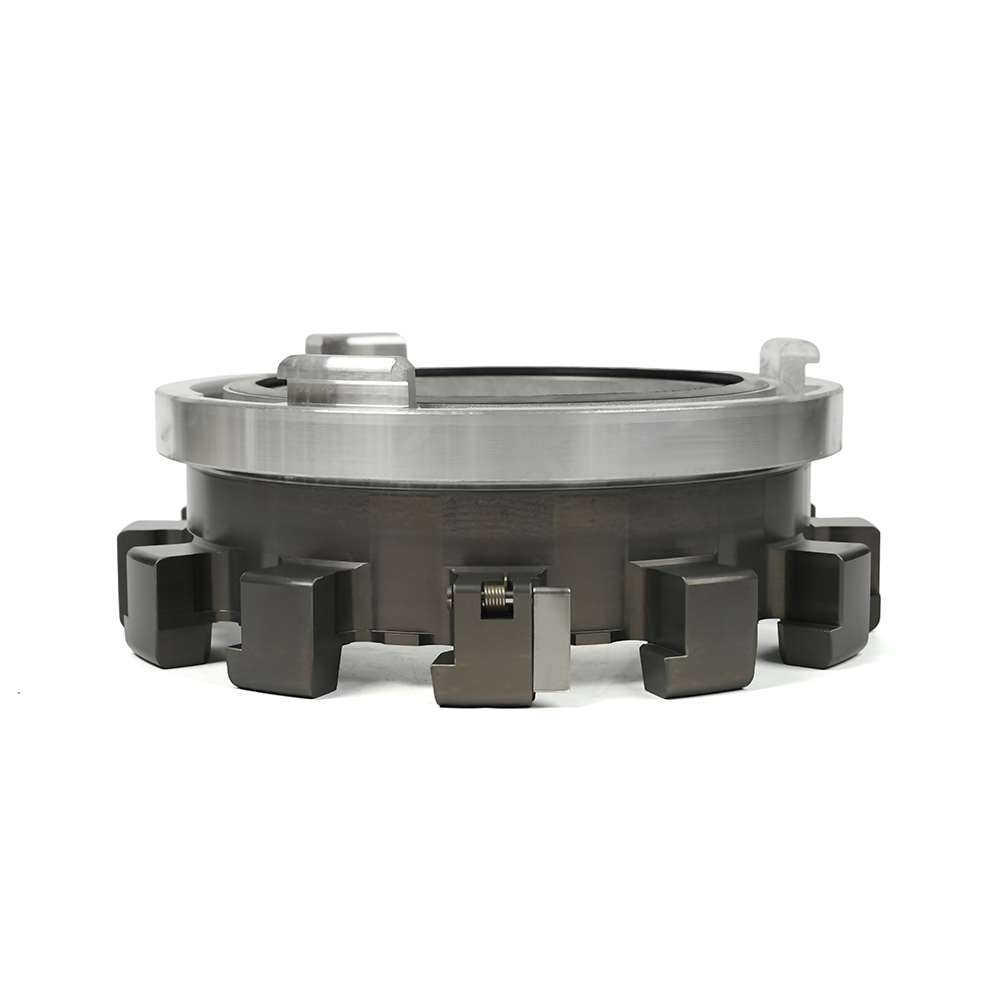
Every hydrant adapter is defined by two interfaces that rarely belong to the same standard family. The inlet side copies whatever the hydrant outlet uses, which in practice means a threaded connection such as NH or NST, BSP or NPT, a symmetrical Storz style coupling, a bolted flange, or a roll grooved pipe end. The outlet side copies the hose coupling you already run, so a pumper carrying Storz hose needs a Storz outlet, while a plant using threaded hose couplings needs a matching thread on that end.
The second design point is the bore. A 3 inch adapter is nominally sized for a 3 inch hose or pipe, which lands at roughly 75 to 80 mm depending on the standard in use, and the outside diameter of the thread or coupling is always larger than that. Operators sometimes measure the thread across its outside diameter, read a figure closer to 90 mm, and order the wrong nominal size as a result. Measure the thread, convert to nominal size using the standard you work to, or simply send the drawing to the supplier.
Flow is the third design point and the one most often skipped. An adapter with a clean full bore internal profile adds very little resistance, while one with a narrow shoulder or a sharp internal step costs visible pressure at high flow. If the adapter sits on the discharge side of a pumper or feeds a monitor, treat it as part of the hydraulic system rather than as a passive accessory.
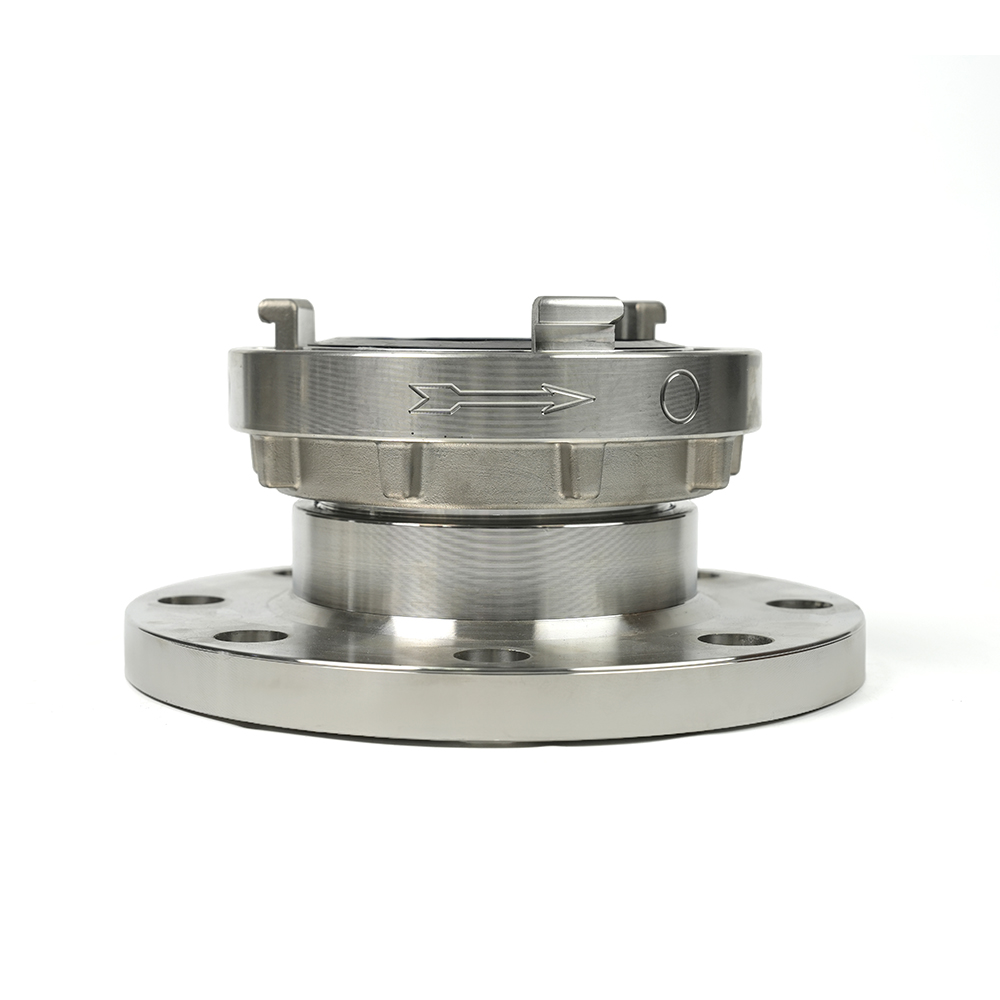 Storz Adapter Couplings – FlangedAdapter couplings are used to connect or convert between different standards and types of fittings. They allow otherwise incompatible interfaces to be connected to eac...View Product →
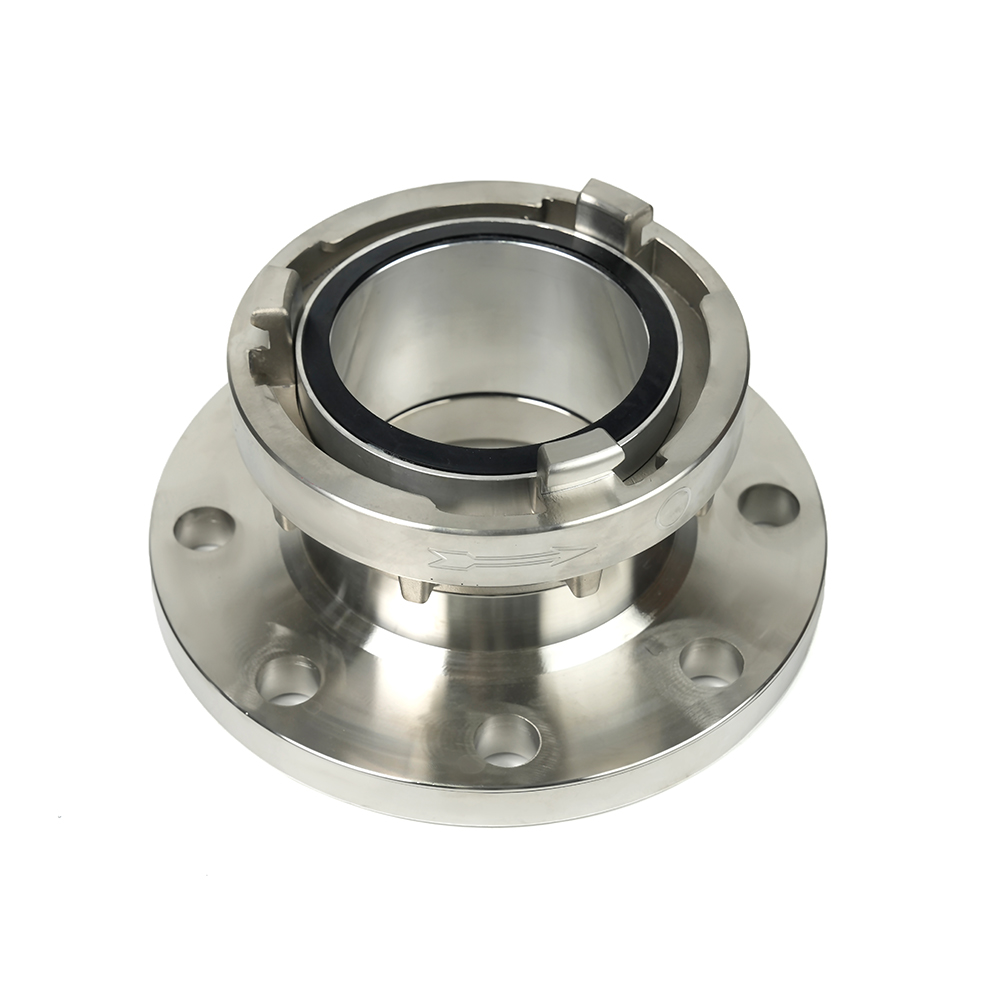
Hydrants with a bolted flange outlet are common on plant risers and industrial ring mains, and the practical answer there is a flanged to Storz adapter that bolts to the outlet and presents a symmetrical coupling to the hose. That combination removes the thread question entirely and gives the crew a coupling that closes with a push and a turn, even with gloves on.
Before ordering anything, spend fifteen minutes at the hydrant. Remove the cap, clean the thread or coupling with a wire brush, and record the measurements below. Photographs taken square on to the outlet, with a tape measure held against the thread, save more time than any email description.
The table below sets out the outlet interfaces you are most likely to meet on a 3 inch hydrant and the details worth verifying in each case.
| Outlet interface | How it seals | Where you meet it | Verify before ordering |
|---|---|---|---|
| NH or NST thread | Hose gasket in the female half against a tapered seat | Municipal and industrial hydrants, pumper inlets | Thread form and pitch, since nominal size is not the thread outside diameter |
| BSP parallel thread | Flat or conical face with an elastomer washer | UK, Commonwealth and many plant fire mains | Parallel versus tapered form, and the correct sealing washer |
| BSP taper or NPT thread | The threads themselves, assisted by sealant | Plant piping, valves and spigot outlets | Taper angle, and the fact that over tightening splits fittings |
| Storz style symmetrical coupling | Elastomer gasket compressed by locking lugs | European hydrants, hose trucks, large diameter hose | Coupling size, locking versus non locking, lug wear |
| Bolted flange | Gasket compressed between two flange faces | Industrial risers, ring mains, pump connections | Bolt circle, bolt count, pressure class and facing type |
| Roll grooved end | Elastomer gasket held by a clamped housing over the groove | Industrial pipework and retrofit hydrant connections | Groove diameter and width, and housing pressure rating |
Figure 1. Where 3 inch hydrant outlets come from in mixed international work
Illustrative reference pattern for planning purposes, not a market survey.
Figure 1 shows how often each outlet type tends to appear when a project spans several countries or several decades of construction. Storz style symmetrical couplings form the largest single group in this mix, which explains why so many 3 inch hydrant adapters are built to convert a threaded or flanged outlet into a symmetrical coupling. Threaded outlets still account for close to half of the total once NH, NST and BSP forms are added together, and that is exactly where most ordering errors happen, because the nominal size hides the thread detail. Flanged and grooved outlets are fewer in number but are concentrated in industrial plants, where the adapter has to match a bolt circle or a groove profile rather than a thread. Read the chart as a reminder to ask what the outlet actually is, rather than assuming that a 3 inch thread is a 3 inch thread.
Two adapters with identical threads can still behave very differently once water starts moving. Bore and internal geometry set the pressure loss, the rated working pressure sets the safety margin, and the gasket compound decides whether the joint survives hot water, foam concentrate or frost. Adapters for fire service are commonly rated at a working pressure of 10 to 16 bar with a higher proof test, so a part rated far below that range is a warning sign rather than a bargain.
Figure 2. Pressure loss through a 3 inch bore and a 2.5 inch bore adapter
Indicative hydraulic reference for a full bore adapter of similar length, for comparison only.
The two curves compare pressure loss through a full bore 3 inch adapter and a 2.5 inch adapter of similar length as flow rises. At low flows the gap is small, which is why a mismatched bore can pass a static test and still generate complaints months later. Once flow passes about 1500 litres per minute the two curves separate quickly, and at 3000 litres per minute the smaller bore costs roughly twice the pressure of the 3 inch part. In practical terms, that extra loss is flow the pumper has to make up, or pressure the nozzle never sees. If the adapter serves only a single short hose line the penalty may be acceptable, but if it feeds a monitor, a standpipe or a large diameter hose layout, stay with the full 3 inch bore.
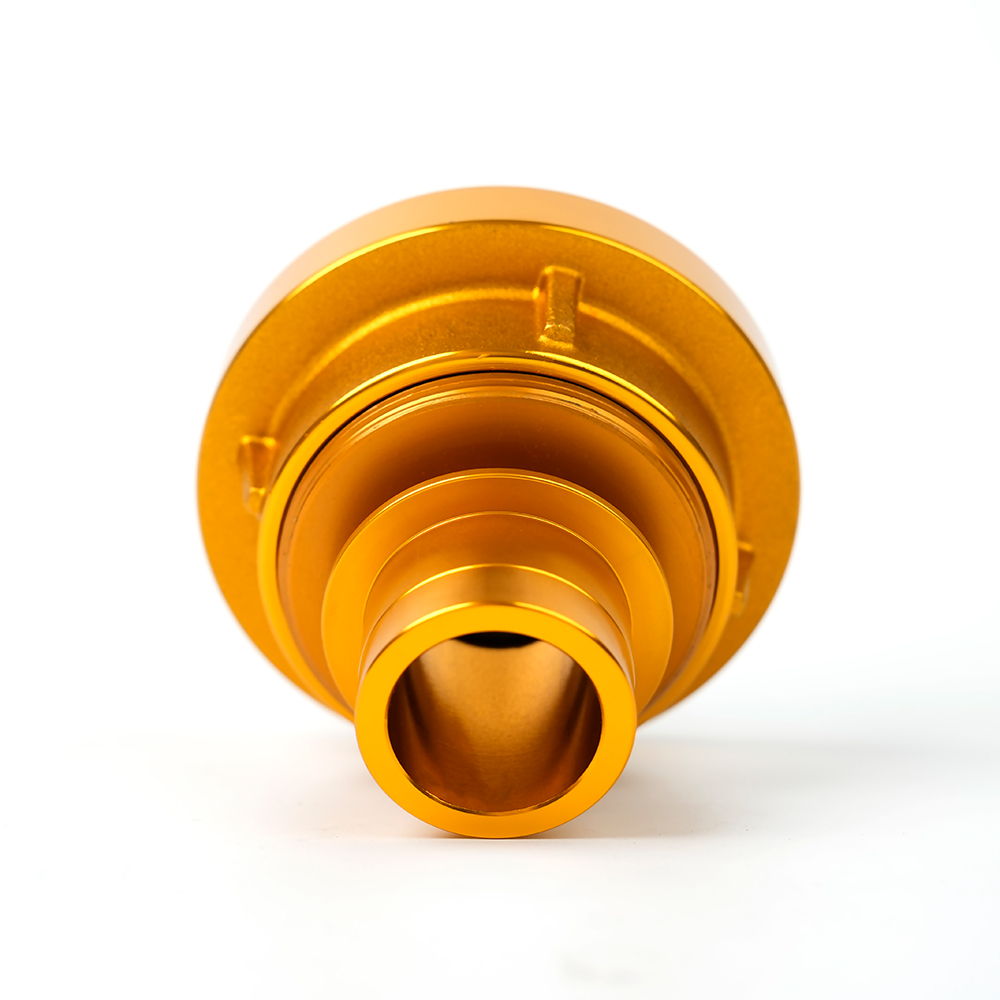 Storz Adapter Couplings – Male MachinoAdapter couplings are used to connect or convert between different standards and types of fittings. They allow otherwise incompatible interfaces to be connected to eac...View Product →
Where the hydrant outlet is threaded and the hose fleet is Storz, an adapter that carries a threaded male inlet on one end and a symmetrical coupling on the other keeps both worlds working without changing hose stock. It is the kind of part worth carrying as a spare on every appliance that crosses regional boundaries.
Body material decides weight, corrosion behaviour and price. Aluminium alloy is light and handles well on long hose lays, brass resists corrosion better in wet and coastal service, stainless steel suits chemical plants and marine air, and ductile iron takes the loads in large flanged or grooved assemblies. Gaskets deserve the same attention: EPDM is the general purpose choice for water, while nitrile compounds hold up better where oils or fuel residues are present.
Figure 3. Sensible inspection interval for a 3 inch hydrant adapter by operating environment
Field practice guidance, adjusted to your own maintenance regime and local requirements.
The bars show how the operating environment changes the sensible inspection interval for an adapter. A treated water system with an indoor hydrant cabinet is the mildest case, and an annual check of threads, gaskets and locking lugs is usually sufficient. Outdoor municipal hydrants face weather, grit and ultraviolet light, so a six month interval stops gasket hardening from turning into a leak at the worst moment. Coastal air and chemical plants bring chloride and acid exposure that attacks aluminium and some plated parts, which makes a three month rhythm realistic. Mining and slurry duty is the harshest case in the chart, because abrasive solids work into threads and grooves, and a monthly look costs far less than a failed connection during an incident.
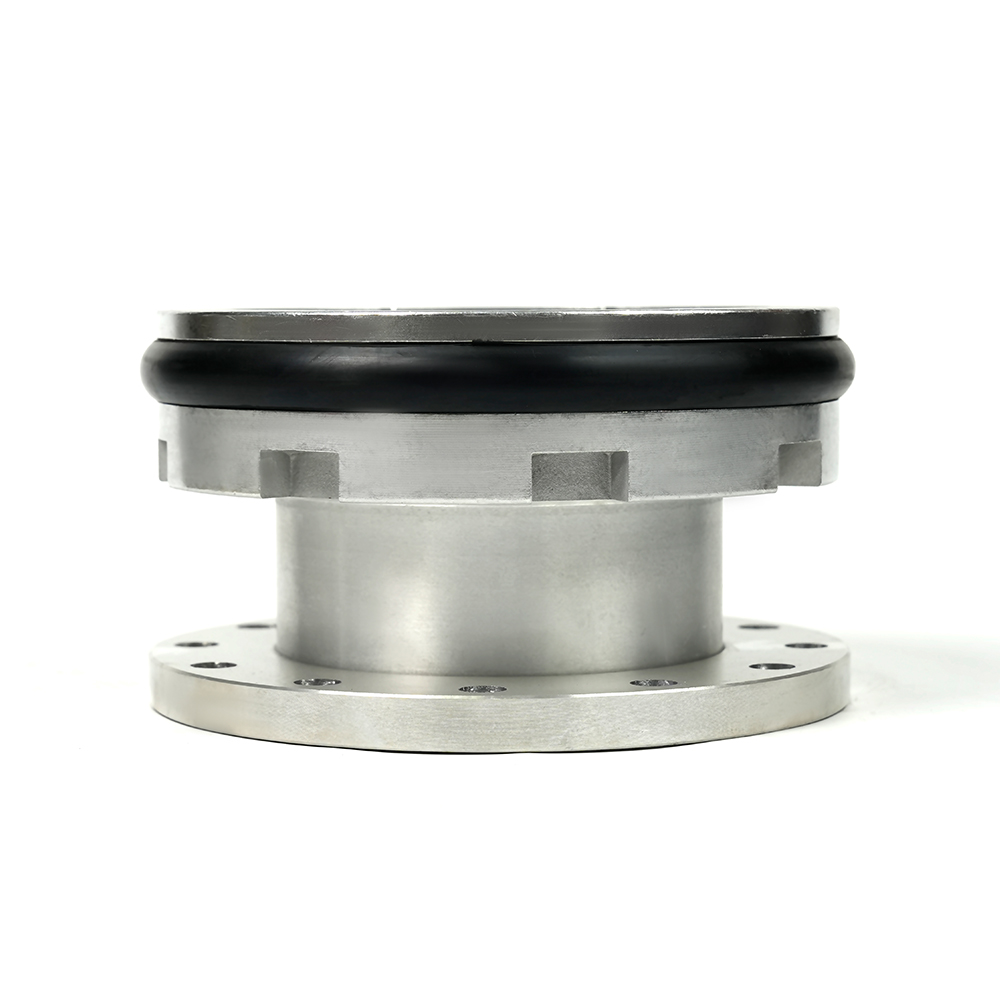 Machino Adapter Couplings – FlangedAdapter couplings are used to connect or convert between different standards and types of fittings. They allow otherwise incompatible interfaces to be connected to eac...View Product →
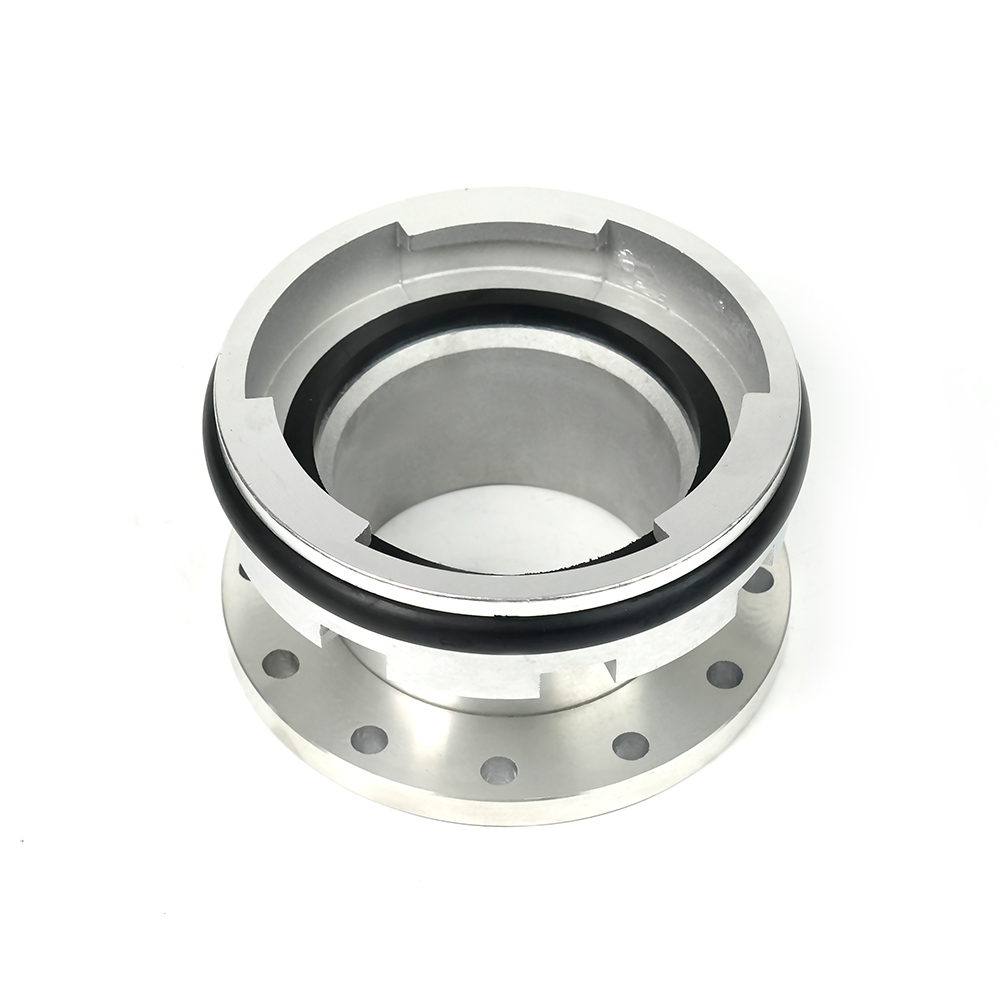
For plant work where the outlet is a bolted flange and the hose fleet uses threaded couplings, an adapter that joins a flange to a threaded coupling covers both directions with one body. It also keeps the bolted joint on the hydrant side, where a gasket and four bolts are easy to inspect during a routine walk down.
Figure 4. Qualitative comparison of three ways to build a 3 inch hydrant adapter
Qualitative engineering comparison, scored from 1 to 5, for selection discussion rather than purchase approval.
The radar chart compares three common ways to build a 3 inch hydrant adapter across five decision criteria. The aluminium alloy threaded adapter scores well on handling because it is light, and it covers threaded interfaces broadly, but it gives up points on corrosion in coastal or chemical service. The brass version matches a similar thread range and adds better corrosion behaviour, yet the extra weight is noticeable on a long hose lay and the material cost is higher. The stainless steel flanged to Storz build takes the top scores for pressure headroom and corrosion resistance, and it is the natural choice for industrial risers where the outlet is bolted rather than threaded. The point of the chart is not that one build wins outright, but that the right build depends on which of those five criteria your site punishes hardest.
Most adapter failures we see reported are handling failures rather than manufacturing failures. A few simple habits remove the majority of them.
Correct connection technique is worth reviewing with the crew as well, and our note on how a fire hose joint should be connected covers the sequence that keeps threads and gaskets intact. Storage matters too: adapters kept loose in a locker are the ones that arrive at a hydrant with a dented coupling head or a flattened thread.
Where the hose fleet spans several standards, our range of Storz couplings in the sizes used for large diameter hose gives you a consistent hose side while the adapter takes care of the hydrant side.
An accurate enquiry shortens the lead time and removes the risk of a wrong shipment. Include the following with every request for quotation.
As a manufacturer of fire hose couplings and adapters since 1998, we work from drawings and gauges rather than descriptions alone, and our production, mould making and inspection processes are covered by an ISO 9001:2015 quality system, with inspection reports from the national fire equipment test centre available for the relevant product lines.
Choose a 3 inch fire hydrant adapter by the outlet first, by the bore and pressure rating second, and by material last, once the operating environment is clear. That order of decisions prevents almost every mismatch we get asked about, and it means the fitting on the truck is the one that actually connects when the call comes in. Send us the outlet measurements or a drawing, and we will match the part to the hydrant you have rather than the hydrant you were told you had.
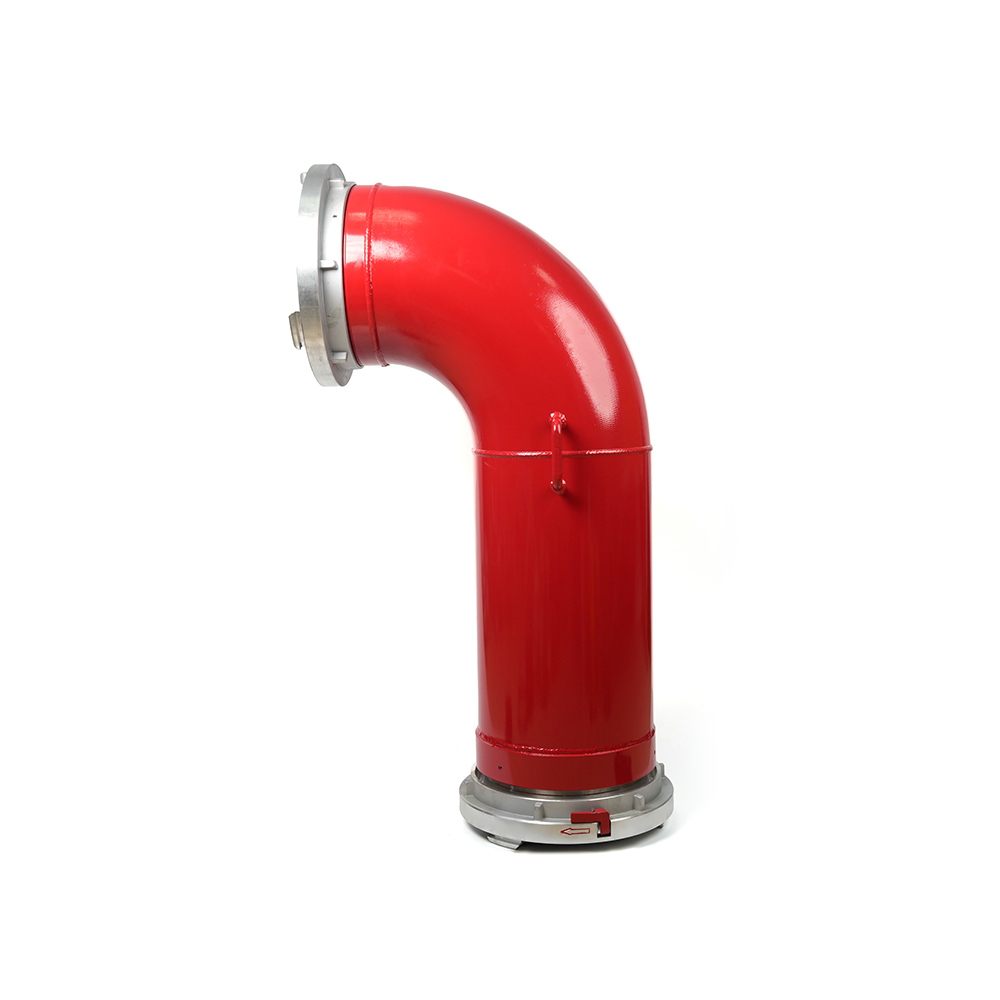 Grooved Fire Elbow-Storz
 Grooved Fire Elbow-Multi-tooth
 Multi-functional Fire Hose Distributor
 Locking Four-Way Fire Hose Distributor
 Locking Three-Way Fire Hose Distributor
 Locking Two-Way Fire Hose Distributor
 Straight Stream Nozzle
 Adjustable nozzle-machino
 Adjustable nozzle-storz
 Storz Adapter Couplings - Multi-Tooth
 Machino Adapter Couplings – Flanged
 Storz Adapter Couplings – Flanged

 Contact Number
+86-0523-83274900
+86-151 9064 3365
 Let our team offer you customs solutions.
 Company Address
West side of Hongxing Middle Road, Lincheng Street, Development Zone, Xinghua City, Jiangsu Province, China
Copyright @Jiangsu Jinding Fire Protection Technology Co., Ltd. All rights reserved Fire Protection Equipments Manufacturers
